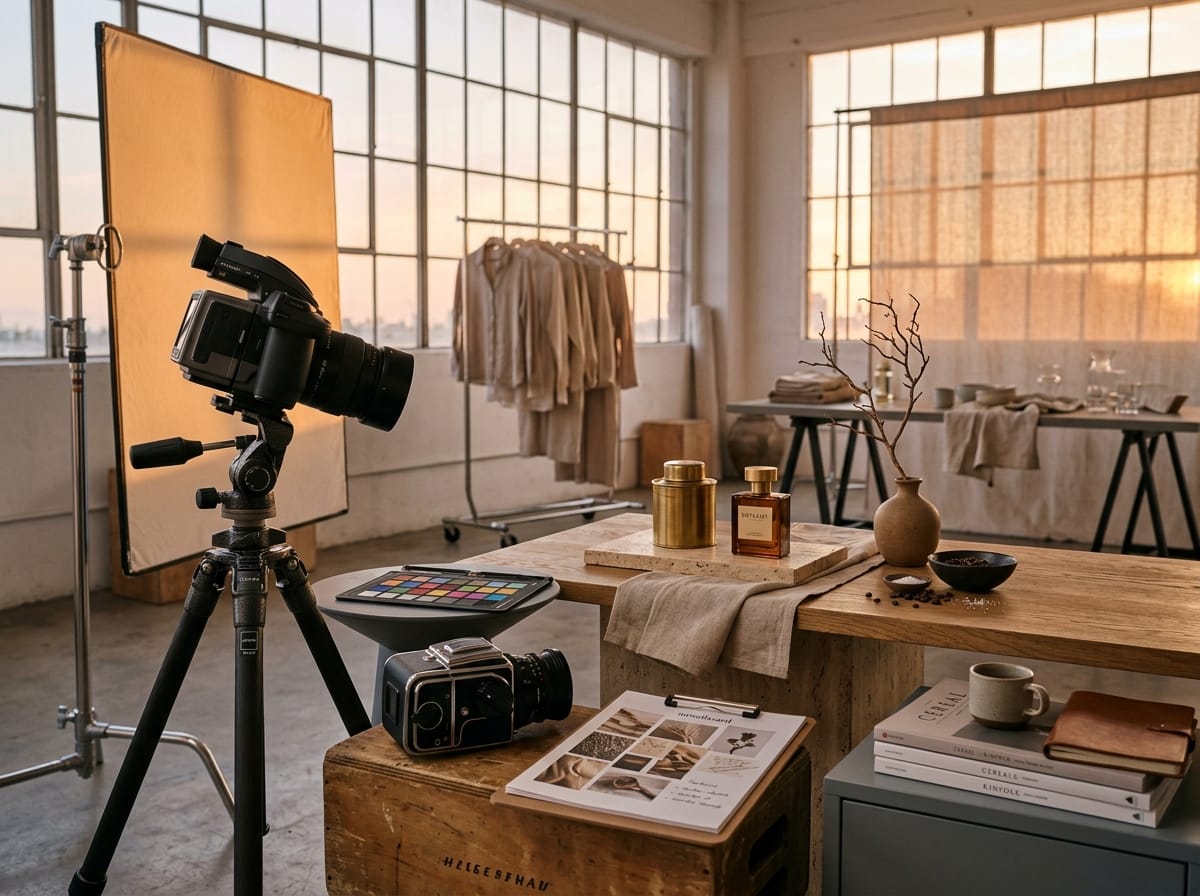
Brand Photography in India: When You Need It and What It Costs in 2026
India’s photography services market is growing fast. Custom Market Insights values it at USD 6.79 billion in 2024, projected to grow at 8.1% CAGR through 2033, with commercial photography for branding, advertising, and product promotion now the dominant segment. The shift is being driven by the explosion of D2C brands, the premiumisation of Indian retail, the demands of e-commerce platforms like Amazon, Flipkart, and Myntra, and the rising importance of brand consistency across digital touchpoints. For a brand selling premium products, hospitality services, fashion, food, or any consumer category, brand photography is no longer one shoot a year. It is a continuous content engine. This guide walks through what brand photography actually is, why it drives real revenue, what categories every brand should know, what the work costs in India in 2026, and how to brief a photographer to get visuals that build a brand rather than just decorate it.
What Brand Photography Actually Is
Brand photography is the visual identity work of a brand. It is the art-directed, intentional photography commissioned to build a coherent visual presence across the brand’s website, social channels, packaging, advertising, and retail environment. It is the photography that makes a customer recognise the brand from a single image, even without a logo on it.
The distinction matters. Catalogue photography is shot to inform: clear, well-lit, accurate, often on a white background, optimised for marketplace listings. Brand photography is shot to persuade: art-directed, styled, atmospheric, designed to build emotional positioning before any rational purchase decision is made. A D2C brand needs both, but they are different products and they cost different money.
A serious brand photography shoot is led by a creative director or art director, planned around a moodboard, executed with a photographer who has the right craft for the brand’s tone, supported by a stylist for set or food or wardrobe, and post-produced to a consistent grade that ties every image to the same visual language. The photograph is not the deliverable. The deliverable is a recognisable brand world.
Why Brand Photography Drives Real Revenue
The case for investing in brand photography is no longer anecdotal. Five numbers from peer-reviewed and industry research make the picture clear.
According to Stanford research on web credibility, 94% of first impressions of a website are design-related. Lucidpress benchmark research shows consistent brand presentation increases revenue by up to 23%, and consistent colour palettes increase brand recognition by 80%. McKinsey reports 65% of consumers can name a brand’s primary colour after a single interaction when visuals are consistent. The Edelman 2026 Brand Trust Barometer found 79% of consumers are more likely to repurchase from brands whose colour identity they can recognise without seeing the logo.
The implications for an Indian brand are immediate. PwC research shows companies delivering consistent brand experiences command 16% price premiums on average. Salsify research finds 87% of consumers will pay more for brands they trust, and that trust is built through consistent visual presentation across every touchpoint. For a D2C brand, a hospitality property, a fashion label, or a premium F&B business, the photography is what makes that consistency possible.
The brands that get this right do not commission one annual shoot. They build a continuous photography programme: a quarterly hero shoot, a monthly content batch, a campaign shoot tied to each launch, and a documentary photographer travelling with the founders. The cumulative effect over twelve months is a brand world that competitors cannot copy in a year.
The Six Brand Photography Categories Every Brand Should Know
Brand photography is a category, not a single format. A serious brand has six distinct types of photography in its content library, each doing a different job.
- Hero product photography. Art-directed, styled, atmospheric photography of the brand’s flagship product, designed to anchor the website hero, the campaign, and the brand book. Single product. Zero compromise. The headline image of the brand for the next six to twelve months.
- Lifestyle and editorial photography. Photography showing the product in real-world use, in beautifully styled environments, with implied or actual human presence. Lifestyle shoots are how brands build aspirational positioning and how consumers picture themselves owning the product.
- Founder, team, and behind-the-scenes photography. Documentary-style photography of the people behind the brand, the studio or workshop, the supplier networks, the production process. Builds trust and authenticity that no styled photography can replicate.
- Retail and environmental photography. Photography of the brand’s physical environment: the store, the cafe, the showroom, the office, the studio. Critical for hospitality, F&B, and retail brands where the space is part of the product.
- Campaign and seasonal photography. Concept-led shoots tied to a seasonal launch, festival, collaboration, or campaign theme. Often the most ambitious shoots of the year, with talent, locations, art direction, and a stronger creative idea behind them.
- Social-first content photography. Photography shot specifically for Instagram, Pinterest, and emerging social platforms, with vertical and square framing, fast turnaround, and lower production load. The continuous content engine that keeps the brand visible between major shoots.
Most established Indian brands run two to three of these categories every quarter. The smartest brands plan a single hero shoot per season and design the day so the studio captures hero, lifestyle, and social-first content in parallel, producing thirty to sixty distribution-ready images from one production day.
What Brand Photography Costs in India in 2026
Brand photography in India in 2026 ranges from a half-day social content batch under ₹35,000 to a multi-day premium campaign shoot crossing ₹6 lakh. Pricing scales with creative ambition, talent, locations, props, and post-production load.
The chart shows working cost bands across five brand photography project types in India in 2026. The most-booked tier for D2C and consumer brands is ₹50,000 to ₹1.25 lakh for a full-day lifestyle or product shoot, and ₹1 lakh to ₹2.5 lakh for a hero brand shoot with art direction. Premium campaign shoots with talent and locations cross ₹4 lakh and routinely reach ₹8 lakh and beyond.
- Social-first content batch (₹25,000 to ₹50,000). Half-day shoot, single set or environment, twenty to thirty edited social-ready stills with consistent grade. Suits early-stage D2C brands building Instagram inventory.
- Lifestyle or product shoot full-day (₹50,000 to ₹1.25 lakh). One day shoot, multiple set-ups, professional lighting, basic styling, thirty to fifty edited stills, consistent colour grade. The most-booked brand photography tier in India.
- Hero brand shoot with art direction (₹1 lakh to ₹2.5 lakh). One to two day shoot with art director on set, full styling, professional lighting, prop budget, fifty to eighty edited stills, premium colour grade and retouching. The standard for established D2C brands and premium F&B.
- Campaign shoot with talent and locations (₹2 lakh to ₹4 lakh). Two to three day shoot, professional models or talent, multiple locations, full crew with stylist and producer, fifty to a hundred edited stills, full retouching and grade. Common for premium fashion, hospitality, and Series B-stage D2C brands.
- Multi-day premium campaign shoot (₹4 lakh to ₹8 lakh and beyond). Three to five days, talent including recognisable faces, multi-location coverage, full art direction with set design and props, premium retouching pipeline, complete deliverable package across web, print, OOH, and social. The kind of shoot a national campaign or major launch requires.
Brand photography pricing is also driven by usage rights. A photo shot for a single Instagram post costs less than the same shot licensed for a year of national OOH and TV advertising. A serious studio raises this conversation at brief stage rather than after the shoot. For a wider view of how production budgets scale across video, see the brand film pricing tier guide and the product video for D2C and ecommerce guide.
How to Brief a Brand Photographer
A useful brief for brand photography has six parts. Most briefs that arrive in studio inboxes have only two of them, which is why so much brand photography in India looks generic.
- The brand world. A short written description of who the brand is, what it stands for, what tone it speaks in, and what feeling the photography should leave behind. Three sentences are usually enough.
- The customer. Who actually buys. The brand photography for a 28-year-old urban professional in Mumbai is not the same as the photography for a 45-year-old homemaker in Pune, even when the product is the same.
- References and moodboard. Five to fifteen visual references showing what the brand wants to feel like. References from fashion editorials, hospitality groups, food magazines, and aspirational lifestyle brands work better than references from direct competitors.
- The deliverable list. How many shots, in what aspect ratios, with and without text space, with and without product hero variations. A serious shoot delivers thirty to a hundred files, each one usable on a specific platform or surface.
- The platforms and usage. Where the photography will run and for how long. Website, Instagram, paid social, OOH, packaging, retail, print. Usage drives both the production scale and the licensing fee.
- The budget range. A working band, not a final number. Studios cannot scope a brand shoot without a budget signal, and brands that refuse to share budgets waste their own week and the studio’s.
A studio that takes the brief seriously will respond with questions and a costed treatment, not a quote. The treatment will include a creative direction, a shot list, a styling approach, and a costed plan. Pay for the treatment if you have to. Studios that produce strong treatments usually produce strong photography.
How Balladi Studios Approaches Brand Photography
Balladi Studios approaches brand photography the same way it approaches a brand film. The studio runs the full creative and production process in-house, from brief to final delivery, with a single producer accountable end to end.
Past brand photography work spans Iron Hill, Embassy Academy, GKB Opticals, United Telugu Kitchens, and retail environments such as Forum South Bangalore. Categories covered include hospitality, food and beverage, eyewear, education, and lifestyle. The studio plans every brand shoot around a moodboard, runs an art director on set for premium projects, and maintains an in-house colour grading pipeline so every shoot from a single brand feels like one continuous body of work.
You can brief Balladi Studios here for a brand photography project, or see past work on the creations page. For wider production guides, see the corporate video production guide and the real estate videography and photography guide.
Frequently Asked Questions
How much does brand photography cost in India in 2026?
Brand photography in India in 2026 ranges from ₹25,000 for a half-day social-first content batch to ₹8 lakh for a multi-day premium campaign shoot. The most-booked tiers are ₹50,000 to ₹1.25 lakh for a full-day lifestyle or product shoot, and ₹1 lakh to ₹2.5 lakh for a hero brand shoot with art direction.
What is the difference between brand photography and product photography?
Product photography (or catalogue photography) is shot to inform: clear, accurate, often on a white background, optimised for marketplace listings. Brand photography is shot to persuade: art-directed, styled, atmospheric, designed to build emotional positioning. A serious brand needs both, but they are different products and they cost different money.
How long does a brand photography shoot take?
A social content batch wraps in three to five hours. A full-day lifestyle or product shoot takes one day, with delivery in seven to fourteen working days. Hero brand shoots take one to two days with delivery in two to three weeks. Multi-day premium campaigns take three to five days with delivery in three to five weeks because of full retouching pipelines.
How often should a brand commission new photography?
Most established Indian brands run a hero shoot every quarter and a smaller content batch every month. The cumulative effect over twelve months is a continuously refreshed photography library. Early-stage brands typically start with two shoots a year and scale up as the brand grows.
Should brands use AI-generated photography?
AI is useful for variations, backgrounds, mock-ups, and quick social content. For hero photography, founder photography, and any image building emotional brand positioning, live-action shoots still significantly outperform AI on consumer trust. The right answer is hybrid: live-action shoot for hero content, AI assistance for scaling cutdowns and quick variations.
Does brand photography really increase revenue?
Yes. Lucidpress benchmark research shows consistent brand presentation increases revenue by up to 23%. PwC research finds companies delivering consistent brand experiences command 16% price premiums on average. Salsify research shows 87% of consumers will pay more for brands they trust, and trust is built through consistent visual presentation across every touchpoint.
References
Custom Market Insights. (2026). India photography services market size, share, forecast 2033. Retrieved from https://www.custommarketinsights.com/report/india-photography-services-market/
Custom Market Insights. (2026). Global photography services market size, trends, share 2032. Retrieved from https://www.custommarketinsights.com/report/photography-services-market/
Lucidpress. (2025). Brand consistency benchmark report.
McKinsey & Company. (2025). The state of brand recognition: Consumer behaviour insights.
Edelman. (2026). Edelman Trust Barometer: Brand trust special report. Retrieved from https://www.edelman.com/trust/2026/trust-barometer
Stanford Web Credibility Project. (2024). How do people evaluate a website’s credibility. Stanford University Persuasive Technology Lab.
PwC. (2025). Future of customer experience survey. PricewaterhouseCoopers Research.
Nielsen Consumer Neuroscience. (2026). Brand recognition and visual identity research.
Let’s Talk
If you have a brand photography project in mind, write to hello@balladistudios.com or send a brief through the connect page. You can also see recent work on the creations page.